
 Read the Russian Translation of this Article
In this blog we try to profile all of the BRIC countries, and how their economic emergence will impact the world political stage. So far, we have given lots of attention to India and China(because they have the largest amounts of trade and direct investment from the US), but I realized that we have not once talked about Russia on this blog. In many ways the Russian economy is much better poised than India's, and for the most part the country is already industrialized(albeit inefficiently). The Russians seem to be determined to regain their status as a world superpower, and they will be a force to reckon with in the future. (To read more about Russia's history click here)
I did a little research about the Russian Federation, and I discovered that their country could be moving into serious long term financial problems. The Russian economy is inextricably intertwined with commodity prices. 30% of the governments budget revenues come from the hydrocarbon(collective term for oil, natural gas, and refinement) industry, and 60% of their export revenue is from the sale of these hydrocarbons.
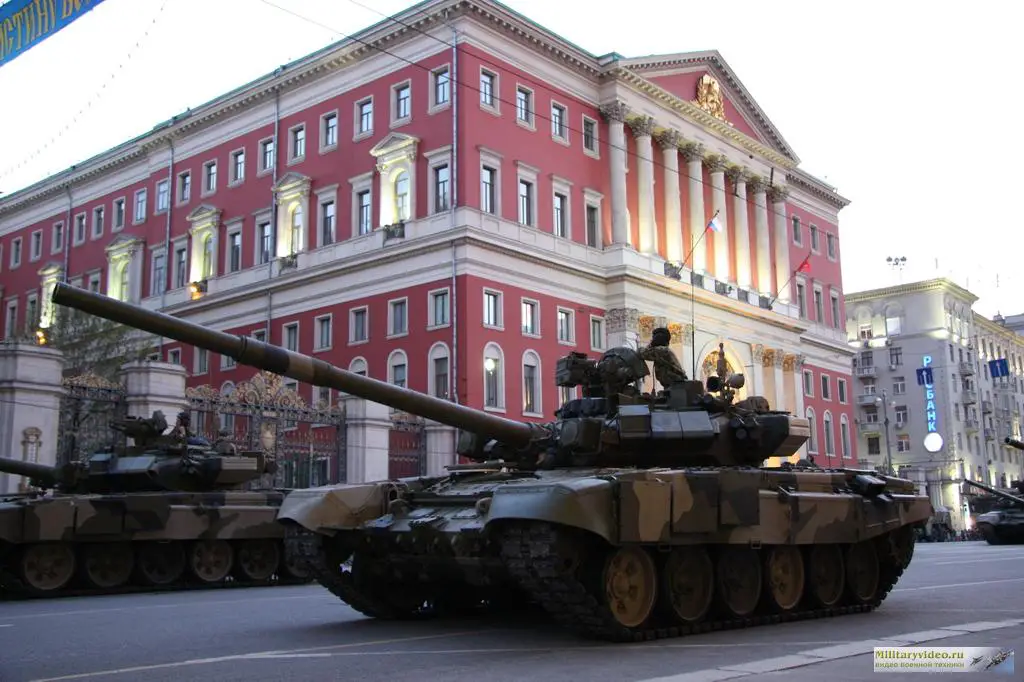
In the short term, a drop in commodity prices will devastate the Russian economy. Their oil production is at a staggering 9 million barrels a day, and 50% of this oil is exported. A drop of 20$ in oil prices lowers their oil revenue by $100M a day. This will negatively affect their account balance, and drive down the value of the ruble. For this reason, the government set up a fund, valued at $150B, to help stabilize their financial state. Their economy is extremely sensitive to fluctuations in these commodity prices. Even worse their government is increasing their expenditures, and is banking on the rising fuel prices. They are expanding their military, and their global presence around the world. Building up a military requires significant investment, and prevent them from saving money in case the commodity bubble bursts.

If steel prices, oil prices, and natural gas prices drop, the Russian economy will have a failure. Oil prices fluctuate quite significantly over extended periods of time. The markets can not sustain permanently high prices, because those would result in a drop in demand. Therefore it would be in a petroleum producing nation's interest to have sell oil at future equilibrium prices and lock in these prices, rather than over producing at unsustainable prices and production levels. However, with Russia this is not the case. What's more Russian production is much higher than can be sustained on their current proven reserves. Their current proven reserves are estimated at 60 billion barrels(We can assume that about 50% more is waiting to be discovered). That means (assuming a full production year round) they will pump their current reserves dry within 20 years, and definitely run out(assuming future discoveries) of tradition crude oil deposits by 30-40 years. It is important to note that after the "Hubbert peak" in oil production, the costs for extracting this oil will increase barrel by barrel. Also, 50% of their production is exported and thus will also impact their foreign exchange reserves.
Russia's economy is still very industrial and manufacturing oriented. They don't have a very matured service industry. Russia can not compete with China, Vietnam, etc. in manufacturing just because of costs. And, without a serious service industry the country really has no other source of trade. The emerging Russian IT industry will loose out to cheaper labor in India and China. Russian goods are non-existent in the Western world. Even India, which has a crumbling manufacturing sector, manages to export goods to the US. Russia can not sustain such a large economy on trade within the CIS. So without commodities Russia is just like any other European economy, and very much unlike an emerging market. Stagnating non-commodity sector growth and a high poverty rate will also lead to political unrest.
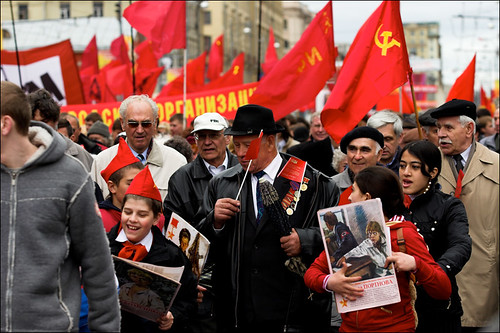
Russia is falling into the same trap the ruined the Soviet Union. They are resuming strategic activities such as long range bomber flights, and reinforcing their nuclear triad. For the US, such spending is distributed through NATO and an individual country doesn't feel as much of the pain. Russia is attempting to face off with NATO over the Czech Republic, Georgia, and the Baltic nations without any allies. The CIS nations have their own issue and don't want(and need) to oppose NATO expansion. They are expanding their "global strike" abilities and rapidly improving their military hardware. The only problem is they are in this alone, and China or India is unlikely to provide them with military, ideological, or moral support. Without support, NATO is free to outspend the Russians on everything producing an interesting Catch-22. If they take the bait and match our military, they risk a financial crisis. If they don't NATO will expand right to their borders, severly comprimising their security.
From my research, I concluded that though Russia is an emerging power, their emergence needs to be taken with a grain of salt. Historically, we have a bad habit of overestimating the threat that they pose to us. Russia will become a regional powerhouse, but their scope of influence will be restricted to Europe, who rely on their fuel. The growth in Russia is very similar to the growth in the Middle East, and we need to realize that unless their industrial efficiency massively improves they will not succeed in anything other than commodites. Only if Russia, makes the right investments with their current windfall revenues, will their country avert this impending crisis.
I want to know your thoughts on Russia, and whether their growth is "real"(as opposed to speculative short term growth)
All data from CIA world factbook
Click on the pictures to see the host sites of the pics

22 comments:
Russia is still a dangerous country
Russia doesn't have to match the so call West tank for tank, it only needs her intercontinental missiles and as money go into the country you will see more nuclear subs out in the sea in the next 10 years armed with 16 ballistic missiles each, i like to know who is gone fool around with that ,..and please lets stop using the word West such a think doesn't exist,....example= if Georgia becomes part of NATO and a war breaks out between Russia and Georgia i like to know which NATO country will declare war on Russia, make sure you remember Russia will have her nuclear triad to use against who ever intervenes ,...no one will intervene remember that stop lying to the Georgians and the others ....Lots of empires have talk bravado and beat the drums of war against the Russians before but they have all left with there tail between there legs.
Though I do agree with your assessment that NATO is not as strongly united as it was in 1989. However, for Russia, their military is a matter of national pride. They will attempt to match our military base for base, brigade for brigade, and man for man. They want to display themselves as a world superpower. A winner doesn't have to explain why they are dangerous, their guns do the talking. What happens if NATO puts up a comprehensive (theater + strategic) missile defense system. Russia will have to match our spending as long as they feel we are a threat. As long as they feel inferior to us, they will pay through their noses for things they can't afford.
Funny that most of the Western media thinks of Russia as a commodity-only place. And peeps doing "little research" on the country keep repeating that. Russia always had a traditionally strong industrial sector: thrue, in the times of the Soviet Union it was an autarky, not exposed and traded on the financial markets. But times have changed and Russian industry making cars (#1 car maker in Europe soon) and other industries is just an example. Commodities were just a catalyst to the economy. Once jump started, it goes on its own, building factories one after another. Thinking that Russia is commodities only place is so 1998.
P.S. To the patriot (of what? US I assume). Here's one from a Russian patriot. Russia doesn't need to match NATO. It's understandable why the US needs NATO: without it the US influence in Europe disappears. And it gradually will disappear anyway, give it another 70-80 years. The US will remain a regional country dealing with Latin America mostly, simply because Europe needs Russia much more than it needs the US. There will be a much more economically viable trade going on between Europe, Russia and China. Just look at the map. So, I think Russia will either negotiate EATO of some sort with ever diminishing role of the United States, or NATO will cease to exist anyway. There're too many economic interests at stake that current military arrangement simply disrupts. If you noticed, Russia behaves very differently these days: it frequently mentions non-symmetrical responses, and slowly builds a network of economic ties and capitalization across Europe. This is the best weapon Russia has. Sorry, the US bet on the wrong horse.
However abstract that may sound , our biggest asset is our innovation. Thus even in economic stagnation we still have the ability achieve modest growth. America's innovation and idea driven economy differs greatly from that of Russia. I was merely stating a fact that 60% of Russia's export revenues come from hydrocarbons. If the price of oil falls 30%, their export revenues will fall 18% which will rapidly change their financial situation. Europeans are having a hard time accepting that the world isn't euro-centric any more, and most of Russia's economic and military influence is restricted to Europe and Asian CIS nations. Many nations that used to be Soviet-bloc are coming to our side and will never go back. Until Russia can prove to these nations that they can offer the same economic incentives that accompany an alliance with the United States, then Russia will gain influence. As latin America liberalizes, our trade agreements will pull them over to the US sphere of control. Guaranteed within 50 years we will have de facto control over Central America, because of our trade and foreign direct investment.
We prevented Western Europe from falling to the Soviets for 46 years, we are prepared to defend the free world for another 100
"we are prepared to defend the free world for another 100". Most of Europe hates your patronizing attitude and already started to think of alliances beyond NATO. And the US is running out of cash pretty quickly, nobody needs a friend like that. So you get a lot of cheers and nodding, but no one takes the US seriously any longer. Defend my ass. I'd rather go to Moscow. Unlike the US they have money, and unlike the US where industries are outsourced to China, in Russia they are growing (while you persuade yourself of your omnipotence). I think athletes are a great indicator of the health of the nation. Now they are leaving the US for Russia. Becky Hammon (basketball will play for Russian Olympic team), NHL is losing one player after another to Russian KHL (Jaromir Jagr, Ray Emery, Radulov) The list goes on.
I've seen kids from the top US business schools going to Moscow and never wanting to go back. Why? It's too boring, Moscow is filled with freedom, life and pretty girls and the short squeeze at home, idiot president, mortgages and gas prices, short squeeze is a bad feeling.
Nah, I choose Russia.
ANON, you are posting from
Stamford,
Connecticut,
United States
Why don't you get an MBA and move to Russia.
If you can't trade in the US market you will do better in Russia.
Move to Russia and work at one our out sourced jobs you fool.
When you need our defense you will be first to complain.
When you are listing out athletes to defend your geo-political policy it is always a bad sign. And you make a fundamentally wrong assessment of the East. The money (capital) is in the US and the UK. Their assets may be in the East, but the VC's are all in the west. We get the return on investment. Yes we don't get the jobs, and it doesn't show up on our trade account, but in the end the east needs the ready access to capital and knowledge the west has to offer.
Russia is well suited for the new world economy, lots of overland transport. For, India they are a much better trading partner. They will gladly trade in heavy machinery and technology. The US has so many security restriction with these goods. I am in Singapore right now, and I can actually see the Russian presence. They have set up one or two offices in the same building.
Ok, lets not get nationalistic differences skew this debate. Objectively analyzing the US and Russia let me show you where I think the debate stands.
Economic Size: US
Economic Growth: Russia
Manufacturing: Tie
Trade Balance: Russia
Ease of Trade: Tie
Currency Stability: US
Political Stability: US
Access to Capital: US
Research and Development: US
Business Environment: US
Foreign Direct Investment: Tie(recent)
Global Political Influence: US
Global Military Presence: US
Some corrections -
Economic Size: US
Economic Growth: Russia
Manufacturing: Tie
Trade Balance: Russia
Ease of Trade: Tie
Currency Stability: US
Political Stability: US...ha ha ha ;))
Access to Capital: RF
Research and Development: US
Business Environment: US..More like tie
Foreign Direct Investment: Tie(recent)
Global Political Influence: US...some way behind, dont'cha think
Global Military Presence: US...Yeah, like nobody else's debt funded
Hey BTW, u know, Bush is the most hated leader and US the most ridiculed country!
Your analysis would have been credible if you had provided some data to back your choices up, I have data and if you want I will give it to you to defend my analysis
Access to Capital:
You say Russia right
Then what is this data?
US total stock market capitalization: 17 trillion (2005)
Russia-$1.322 trillion (2006)
US total capitalization of FDI- $1.967 trillion (2007 est.)
Russia-271.6 billion (2006)
US and Russia investment as a percentage of GDP are both ~20%
BTW
Bush might be the most hated leader but at least in the US we can voice that opinion without dealing with the Secret Police...
Now, I've never lived in Russia, but I did spend two years in Kazakhstan and six months in Uzbekistan. Russia is as big as the moon to them, and yet that doesn't stop Kazakhstan from making its own oil deals with China, and Uzbekistan signing manufacturing deals with South Korea, things that 15 years ago Russia wouldn't have allowed.
This is not to say that the US will 'reign supreme' or even that they should. When locals in Central Asia discuss global politics, it isn't the US that won the Cold War, it's "The West." Which is not to say that Georgia and Turkey and such places are borders between some great East/West divide - they are large grey areas that have to keep good relations with both sides. As Georgia is learning with South Ossetia, you can't thumb your nose at the Russians without consequences.
This idea of ranking US versus Russian Federation statistics shows little more than the person's own opinion. Statistics serve the statistician's world view, and if they don't they are ignored or doctored. That's just the way things go.
Does the US have a greater military presence than Russia? Does it have a stronger economy? More stable political system? More domestic civil liberties?
I don't think anyone would really disagree that the advantage is with the US, though qualifications and clarifications can be made. The Peace Corps is one popular tool - it's a charitable organization that offers - free of charge to the hosting country - college educated English teachers, NGO and community development organizers, etc. As some countries have developed, they have let the Peace Corps know their services aren't needed anymore. And other times, developed countries have been offered the Peace Corps, to their chagrin and our embarrassment. Fortunately, the Peace Corps, by mandate, can only operate in a country via invitation.
Japan was offered the Peace Corps back in the 60s, which is comical to me. They politely denied the 'honor.'
Brazil and India have both played host to Peace Corps. Back in the days before Hell Broke Loose in the 60s and 70s, Afghanistan also had a Peace Corps post. Some countries lost their posts due to political reasons, not because 'their work was done.' Two great examples: Iran and Russia.
The Russian government claimed the Peace Corps was a cover for CIA spies. While it's true that college-aged Volunteers may not be the most effective carriers of development, they are hardly worthy of the CIA spook label the Russians put on them.
Because of this, during my own Peace Corps service, I was called a spy by Central Asian nationals more times than I can count. Most didn't take it seriously - they just couldn't understand why an American would in their town teaching English when their own college educated people couldn't seem to leave fast enough.
To make one more comparison - even at the height of the Soviet Union, there were houses within 20 km of the Kremlin without indoor plumbing. Farmers working with scythes and donkey- and horse-driven machinery could watch rockets launch from Baikonur in Kazakhstan. Which is not to say they had no toilets or tractors... they just didn't put it into their state budgets to make sure that everyone got one. When Gorbachev visited the wheat farmers of Canada in the 80s, he famously interviewed locals about why they worked so hard. "Well, we just kinda do our thing." This was amazing to Gorbachev, coming from a childhood of staterun farms running at less than 50% efficiency and endemic sabotage and procrastination. He asked one farmer why the government trusted a lowly farmer with such expensive equipment [tractors, combine, harvester]. His response was "I OWN all of this stuff."
That mentality still exists in Russia. Moscow and St. Petersburg may have the richest people on the planet, but it's hardly representative of anything in Russia outside the city limits. There are 11 time zones of undeveloped 3rd world poverty. Mid-state Nebraska might not look like much to a New Yorker, but it would be heaven to someone living in some Siberian apartment block.
Thank you Micheal, I appreciate your analysis. This debate was going out of control and we brought emotions into it rather than reason. Thank you for bring this debate back on topic, and provide a fair analysis of the whole situation.
I heard about this discovery of oil in the Arctic ocean. Who gets access to it, and won't this help Russia?
Michael great analysis.
You should have used to the Submit and article link.
Content like that shouldn't get buried in the comments.
I think as of now this arctic oil debate is only academic because no country has the infrastructure to profit from an oil operation in the Arctic sea. However, you are probably right that it will help Russia, since they are probably best suited to start an operation. Their Trans-Siberian Railroad gives them a solid overland transport option which is easier to use in fall and winter. However, Russia doesn't have the technology to drill/explore properly so they would need Western help. Where most of the countries, who lay a claim the north pole, fail is the lack of warm water ports near potential drilling areas. Since I have not been to any Siberian ports, I can't judge their facilities but I have seen some Alaska warm water ports. The port of Seward and the port of Valdez will be critical in any arctic ocean operation. Barrow and Prudhoe Bay would be used as "ports of call". However, I have seen the port of seward and I am not sure if it is ready for supertanker and high displacement merchant marine vessels. Nevertheless it is a warm water port and thus very beneficial to any future US operations in the Arctic. Another area where I think the Russian's have the edge is in ice clearance. Because of necessity they have a better fleet of ice breakers and necessary observation vessels. The American merchant marine fleet is about half the size of the Russian fleet, and that puts us at a disadvantage. American oil fields on the North Slope is Alaska are supplied by Ice road trucks, the infrastructure for a major expansion of operations is not present.
Before people get too emotional remember this song. Evidently times have changed much since 1962.
Blowin in the Wind by Bob Dylan
How many roads must a man walk down
Before you call him a man?
Yes, 'n' how many seas must a white dove sail
Before she sleeps in the sand?
Yes, 'n' how many times must the cannon balls fly
Before they're forever banned?
The answer, my friend, is blowin' in the wind,
The answer is blowin' in the wind.
How many times must a man look up
Before he can see the sky?
Yes, 'n' how many ears must one man have
Before he can hear people cry?
Yes, 'n' how many deaths will it take till he knows
That too many people have died?
The answer, my friend, is blowin' in the wind,
The answer is blowin' in the wind.
How many years can a mountain exist
Before it's washed to the sea?
Yes, 'n' how many years can some people exist
Before they're allowed to be free?
Yes, 'n' how many times can a man turn his head,
Pretending he just doesn't see?
The answer, my friend, is blowin' in the wind,
The answer is blowin' in the wind.
Well Intercontinental missiles will not play part in conflicts so much longer. Already today countries like Sweden have technology to intercept bullets from guns and grenades. So It will be no match to stop a missile.
While I think that the article and some of the previous posters are a bit too pessimistic about Russia's situation I also happen to think that it's not going to be muscling the US out of europe any time soon.
What I do see happening is Russia getting into europe and developing some serious long term ties with the EU, concurrently with US ties remaining as they are. I think that Europe is realising, as the US should, that Russia is a stabalizing influence on many of it's neighbors and should be brought into the fold instead of treated as an adversary.
Also I think it's a bit naiive to paint a dependance on rising oil prices as a huge risk as we've consistently seen that that's just what prices are doing thanks to declines in production world wide. If anything's going to threaten the oil price it's use which only seems to happen when the world economy takes a hit. In short Russia's banking on the world economy continuing to grow for stable or rising oil prices, not exactly a hard bet to make.
Post a Comment